5 mins
You clicked on a Shopify theme. It looked perfect. Then you saw another one. Even better. Then you read reviews about speed, conversion rates, mobile optimisation, and suddenly you had 30 browser tabs open and no clue what to do next.
Sound familiar?
If you're running a wellness or lifestyle brand on Shopify, you've probably been here. The theme store alone has over 200 options. Add third-party marketplaces, page builders, and custom development into the mix and the decision becomes paralysing.
Here's the thing nobody tells you: picking the wrong theme doesn't just waste money. It traps you. You'll spend months fighting limitations, bolting on apps to fix gaps, and wondering why your conversion rate refuses to budge.
This guide will help you cut through the noise. So you know, there are ZERO affiliate-driven recommendations - therefore no skin in the game, just trying to help you out. This is our straightforward framework for choosing a Shopify theme that actually works for your lifestyle and wellness brand in 2026.
Your Five Options (And What Each Actually Means)
Let's simplify this. When it comes to Shopify themes, you have five paths:
Free Shopify themes (Dawn, Horizon, Refresh, etc.)
Paid themes from the official Shopify Theme Store (£250-£400)
Third-party themes from marketplaces like ThemeForest
Page builder apps (Shogun, PageFly, GemPages)
Fully custom builds (agency or developer-built)
Each has trade-offs. Let's break them down.
Start Here: What Features Do You Actually Need?
Often we get people saying to us ‘should I pick this one because it looks like it’s for skincare?’. No. Before you look at a single theme, answer this question: What does your brand need to do well, both now and in three years?
Three years is the sweet spot for planning. Any longer and you're guessing. Any shorter and you'll outgrow your theme too quickly and feel suffocated by its limitations.
Here are the features that actually move the needle for conversion:
Upsell and cross-sell functionality built into product pages and cart
Benefit bars on your product detail pages (PDPs) highlighting trust signals, ingredients, or unique value props
Storytelling sections that help you weave brand narrative throughout the site (not just on an About page)
Delivery and shipping promo bars that remind customers of your running offer ("Free shipping over £50". Or things like countdown timers, but we don’t like those personally and think they’re really tacky)
Quick add-to-cart from collection pages
Mega menus for brands with multiple collections
Mobile-first design (over 70% of your traffic is probably on mobile)
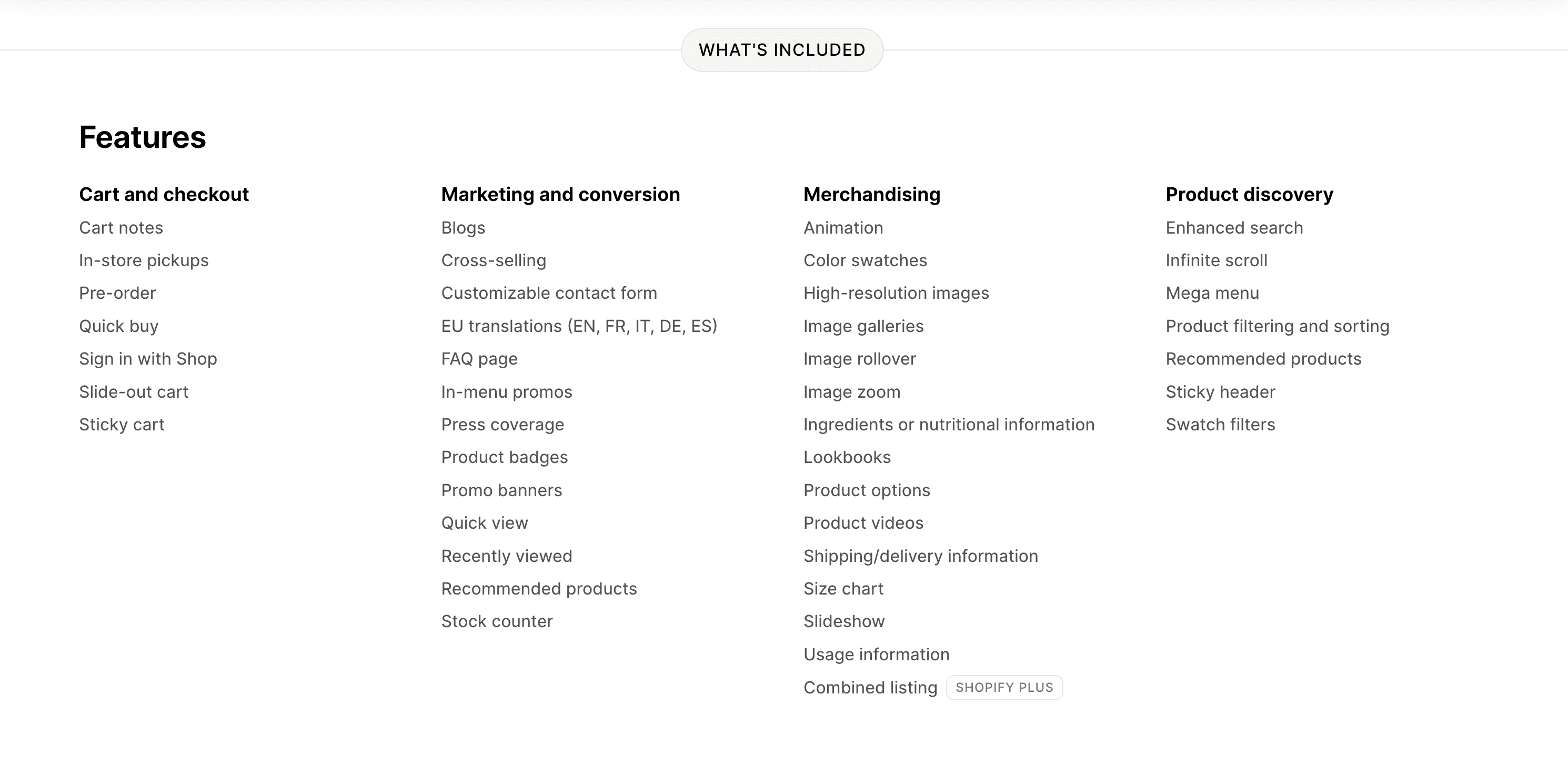
Make a list. Check which features come built into the themes you're considering versus which ones require apps or custom development. That's where hidden costs stack up.
You can see what features a theme has in the 'What's Included' section:
Free Shopify Themes: Dawn vs Horizon
Let's address the obvious question: if free themes exist, why would anyone pay for one?
The honest answer in 2026: the gap has closed dramatically.
Dawn: The Developer's Choice
Dawn has been Shopify's flagship free theme for years. Most other free themes in the store (Craft, Sense, Taste, Crave) are essentially Dawn with different presets and styling.
Best for: Brands with developer resources who want a clean, lightweight base to build on top of. Dawn is incredibly flexible if you have the technical capacity to customise it.
Watch out: Out of the box, Dawn is minimal. You'll need development work to create the features and visual polish that paid themes include by default.
Horizon: Shopify's 2025 Flagship (And Where They're Investing)
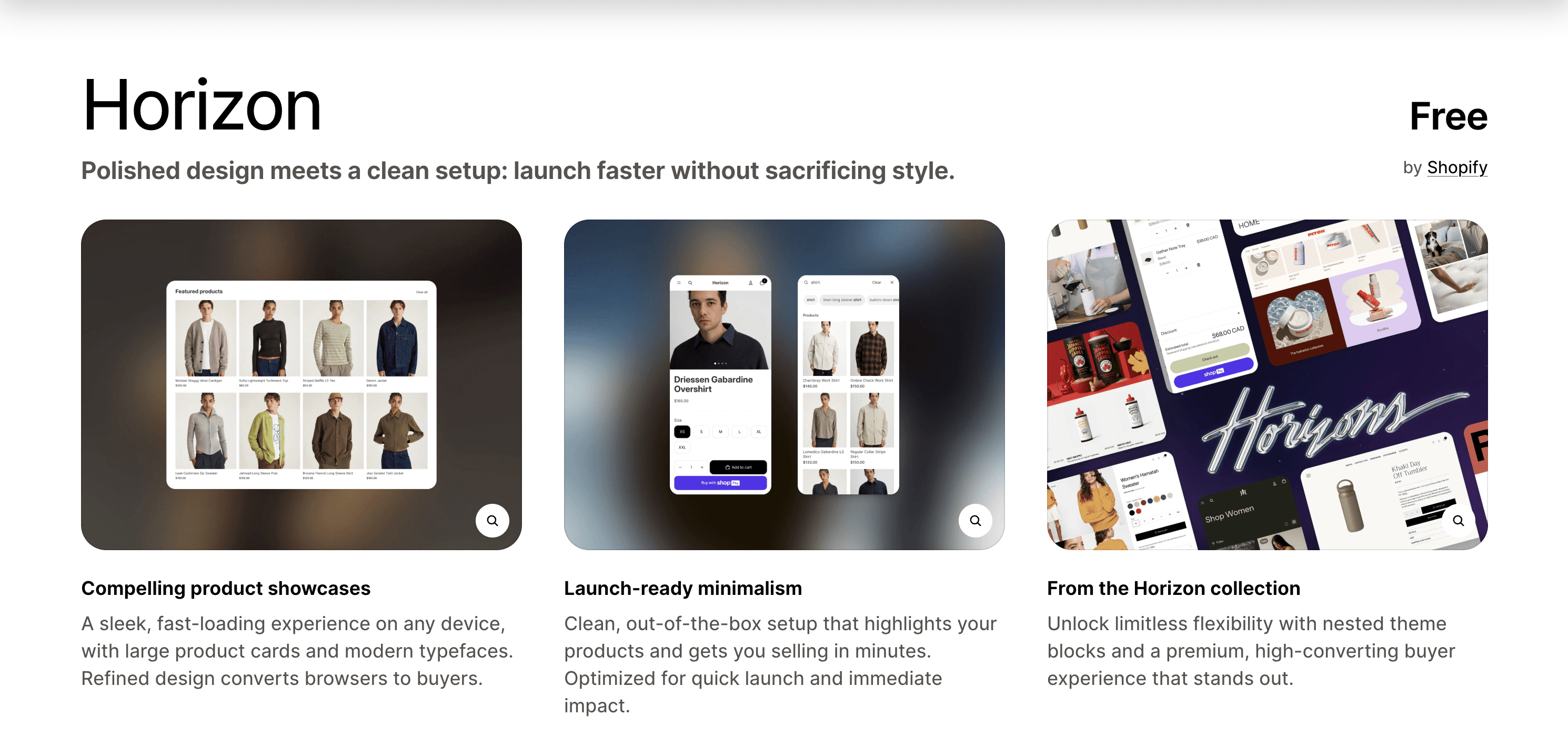
Horizon launched in summer 2025 and represents Shopify's vision for the future. It introduced blocks anywhere and everywhere, improved modularity, more flexible design, and updated design patterns aligned with Shopify's long-term roadmap.
The Shopify community has noticed the shift. Looking at update patterns, Dawn's last update was July 2025 while Horizon was updated in October 2025. Shopify is clearly investing more heavily in Horizon going forward.
Best for: Brands who want maximum flexibility without paying for a theme and who want to stay aligned with where Shopify is heading.
Watch out: Horizon is incredibly powerful, but that power comes with risk. If you don't understand what converts, you'll add blocks everywhere in the wrong order and create a confusing mess. The flexibility is a double-edged sword.
The bottom line: If your store is working well on Dawn and you're happy with it, there's no urgent need to migrate. But if you're starting fresh or planning a major redesign, Horizon is where Shopify's future improvements will land first.
Paid Shopify Themes: When They're Worth It (And When They're Not)
Paid themes from the official Shopify Theme Store typically cost between £250 and £400 as a one-time purchase. The pitch is simple: more features out of the box, better design, faster setup.
But here's what the theme demos don't tell you: some paid themes are brilliant and some are genuinely terrible. The price tag doesn't guarantee quality.
What to Look For in a Paid Theme
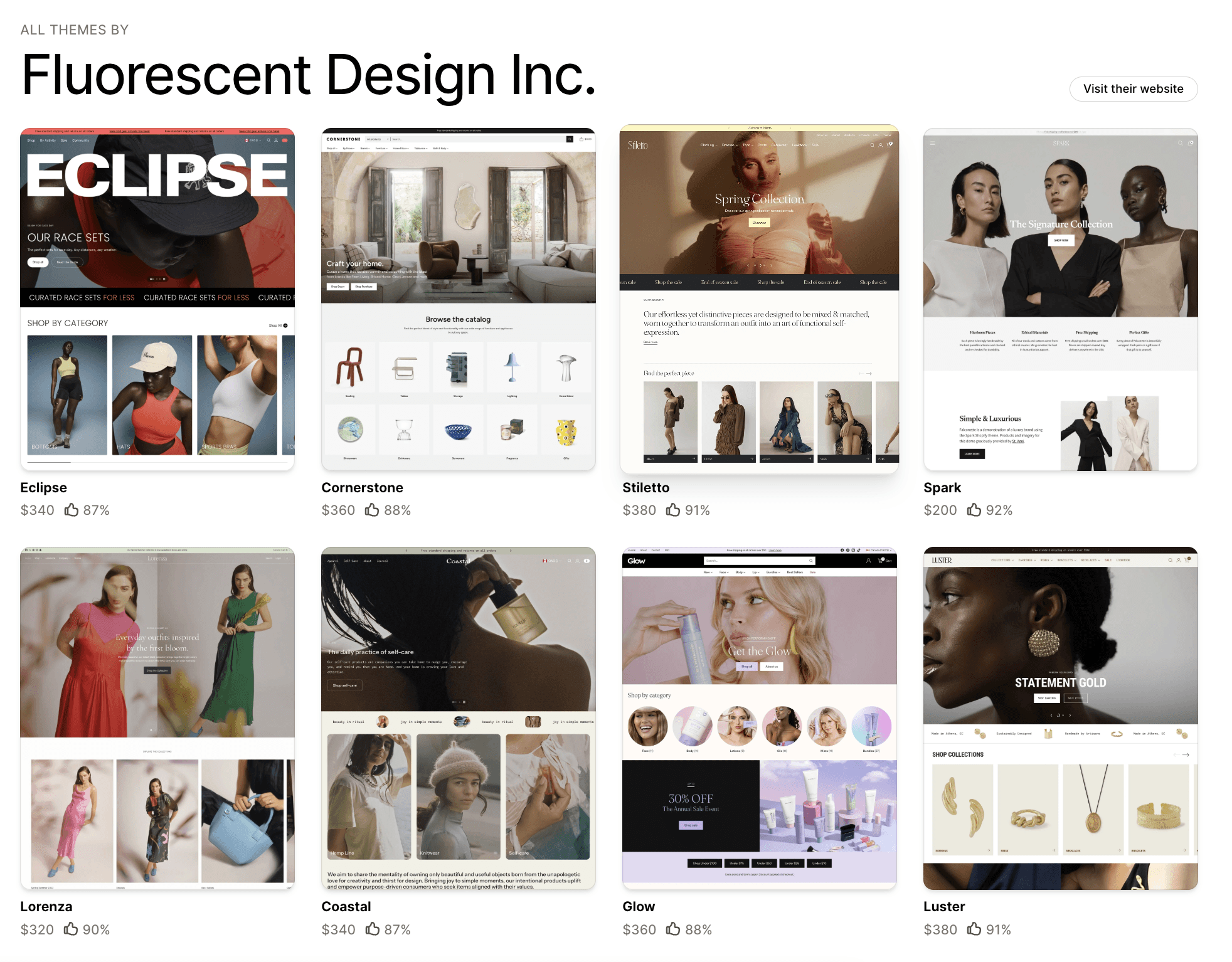
Established theme developers: Companies like Fluorescent Design,, Archetype Themes, Clean Canvas and Maestrooo have track records. Their themes get regular updates, have proper documentation, and won't disappear overnight.
Review count and quality: Look for themes with hundreds of reviews.
Built-in conversion features: The best paid themes include mega menus, quick add-to-cart, advanced filtering, and promotional elements without requiring additional apps.
Paid Themes We Recommend
Stiletto, Be Yours and Baseline are solid choices for wellness and lifestyle brands. They're well-designed, regularly updated, and come packed with features.
But here's the catch: Popular themes like these are used by thousands of stores. If you choose Broadcast or Prestige and use default settings, your site will look like dozens of others in your space. Your brand identity and visual differentiation become even more critical.
The Risk Factor
When you buy a paid theme, you're betting on a third-party company continuing to exist and maintain their product. If that company slows down updates or disappears entirely, you're stuck with a theme that might break with future Shopify changes.
Shopify's free themes don't have this risk. They're built and maintained by Shopify itself.
Third-Party Themes and Page Builders: Proceed With Caution
Third-Party Marketplaces (ThemeForest, etc.)
Rule of thumb: stick to the official Shopify Theme Store. Themes there are required to meet Shopify's performance, accessibility, and code quality standards.
Third-party marketplace themes are where most problems start. They often have messy, poorly maintainable code that breaks with Shopify updates or conflicts with apps. The £50 you save upfront can cost you thousands in developer fixes later.
Page Builder Apps
Apps like Shogun, PageFly, Replo, and GemPages let you design pages visually without touching code. They typically cost £0-60 per month depending on features, working out to £300-700 per year.
The appeal is obvious: drag-and-drop design feels accessible. But there are significant downsides:
Another monthly subscription adding to your tech stack costs
Performance can suffer (page builders add code bloat)
You're locked into their ecosystem
If the app changes pricing or features, you're affected
Given how flexible Horizon has become, plus Shopify's new AI-generated blocks feature, the argument for page builders has weakened significantly in 2026.
Custom Theme Builds: When They Make Sense
Fully custom themes cost thousands of pounds and take weeks or months to build. For brands under £10k/month in revenue, this is overkill.
Exception: If you work with an agency that already has a conversion-optimised base theme they've refined across multiple clients, custom can make sense. You're not paying them to reinvent the wheel. You're paying for their accumulated knowledge of what converts, baked into a foundation they customise for your brand.
But if you're considering custom just because you need one or two specific features? Stop. Build your store with Horizon or a quality paid theme first. Then hire a developer to add those specific features. You'll launch faster and spend less.
The Game-Changer: AI-Generated Blocks
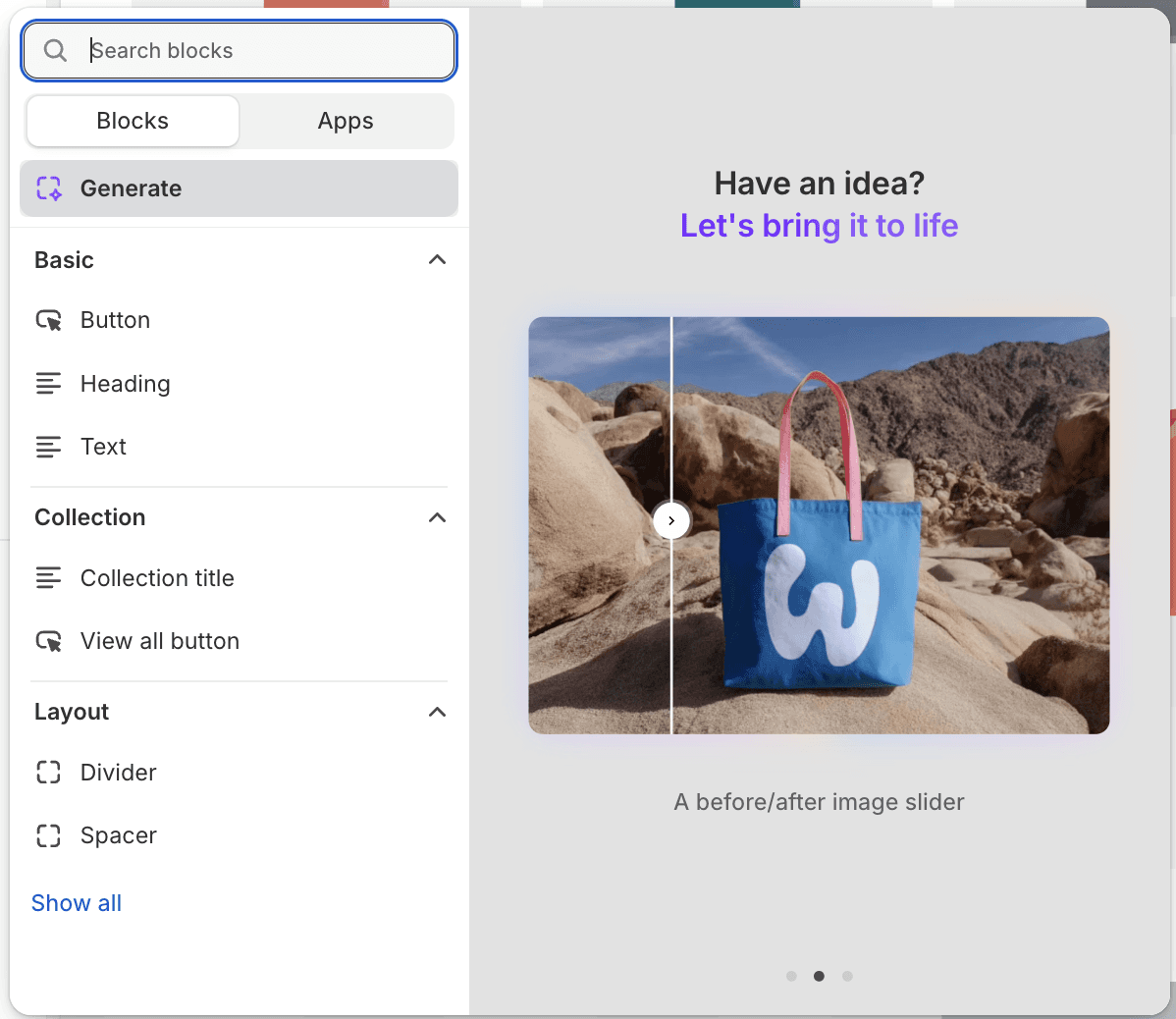
Here's something most guides won't mention: Shopify now lets you add AI-generated blocks anywhere across all themes.
What does this mean? If a theme doesn't include a feature you need, you can describe it to Shopify's AI and it will generate the code for you. Promo banners, shop-the-look sections, custom review displays, specific product page layouts. If you can describe it clearly, AI can often build it.
This is massive. Features that used to require hiring a developer can now be added in minutes if you're comfortable prompting AI effectively.
The catch: You need to know what you want. AI won't tell you what converts. It will build what you ask for. If you ask for the wrong things, you'll end up with a cluttered site that doesn't sell.
Your Decision Framework
Here's how to actually make this decision:
Step 1: List the features you need now and the features you'll likely need in three years.
Step 2: Assess your resources.
Do you have developer capacity?
Budget for a paid theme?
Time to set it up yourself to convert?
Time to learn AI prompting?
Step 3: Match your situation to the right path:
Have developer resources? Start with Dawn or Horizon as a base and build what you need.
No developer but understand conversion? Horizon + AI blocks can get you surprisingly far.
Want features out of the box without dev work? A quality paid theme like Prestige or Broadcast makes sense.
Need something truly custom? Work with an agency that has a proven, conversion-optimised base theme.
Want to stay aligned with Shopify's future? Horizon is where new features and improvements will land first.
The Uncomfortable Truth About Themes
Here's what nobody selling themes wants you to hear: your theme is not the reason your store isn't converting.
Yes, a bad theme creates friction. Slow loading times, confusing navigation, and missing features hurt conversion rates. But switching from a decent theme to a slightly better theme won't transform a struggling store into a successful one.
What actually matters:
Does your product page clearly communicate value in the first three seconds?
Are your images professional and trust-building?
Does your copy speak to customer pain points?
Is your checkout process friction-free?
Are you collecting and displaying social proof effectively?
If you have unlimited budget, spend it on professional photography, brand strategy, copywriting, and conversion rate optimisation. Not on an expensive theme hoping it will magically fix underlying problems.
The Bottom Line
Don't overcomplicate this decision.
Pick a theme that's already close to what you want to build. Stick to the official Shopify Theme Store. If you're starting fresh, look seriously at Horizon. If you want features without development work, choose an established paid theme. Avoid third-party marketplaces.
Then stop thinking about your theme and start focusing on what actually converts: clear messaging, trust signals, professional visuals, and a frictionless buying experience.
Your theme is the foundation. What you build on top of it determines whether your store thrives.
Need Help With Your Shopify Store's Conversion?
If you're a wellness or lifestyle brand stuck under £40k/month and wondering why traffic isn't turning into sales, the problem probably isn't your theme. It's what's on your pages and how it's organised.
We help Shopify brands identify exactly what's blocking conversions and fix it, whether that's messaging, page structure, or user experience, without the guesswork.
Spots for our 30 Day Conversion Plan open monthly.
Join the next intake before we cap at 10 brands.